
The world of trucking is a complex ecosystem of powerful machines, intricate systems, and specialized terminology. Whether you're a seasoned trucker, a budding mechanic, or simply a curious bystander, understanding the names of the various parts that make up a truck is crucial. This guide will serve as your comprehensive roadmap, breaking down the anatomy of a truck, explaining the function of each part, and providing visual aids to help you navigate the world of truck part names with confidence.
Why is Knowing Truck Part Names Important?
Decoding the Anatomy of Your Beast: A Comprehensive Guide to Truck Part Names (With Pictures)
Knowing your truck parts isn't just about sounding knowledgeable; it's about:
- Effective Communication: Being able to accurately describe a malfunctioning part to a mechanic saves time and prevents miscommunication, leading to faster and more accurate repairs.
- Informed Maintenance: Understanding what each part does allows you to better anticipate potential problems and perform preventative maintenance, extending the life of your truck.
- Cost Savings: By identifying the specific part needed, you can avoid unnecessary repairs and ensure you're only paying for what's broken.
- Safety: Recognizing warning signs and knowing which parts are critical for safety can prevent accidents and keep you and others safe on the road.
This guide will cover the major systems and components of a typical heavy-duty truck. Let's dive in!
I. The Heart of the Machine: Engine Components
The engine is the powerhouse of your truck, converting fuel into mechanical energy. Understanding its key components is essential.
- Engine Block: (Image: A close-up shot of a bare engine block, clearly showing the cylinders) The foundation of the engine, housing the cylinders, pistons, and other critical components.
- Cylinder Head: (Image: A cylinder head, showing the valves and ports) Sits atop the engine block and contains the valves, spark plugs (in gasoline engines), and combustion chambers.
- Pistons: (Image: A piston with connecting rod attached) Move up and down within the cylinders, driven by the expanding gases from combustion.
- Connecting Rods: (Image: A connecting rod) Connect the pistons to the crankshaft, transferring the piston's motion.
- Crankshaft: (Image: A crankshaft) Converts the linear motion of the pistons into rotary motion, which powers the transmission.
- Camshaft: (Image: A camshaft with lobes) Controls the opening and closing of the intake and exhaust valves.
- Intake Manifold: (Image: An intake manifold) Distributes air to the cylinders.
- Exhaust Manifold: (Image: An exhaust manifold) Collects exhaust gases from the cylinders.
- Turbocharger: (Image: A turbocharger) Forced induction device that increases engine power by forcing more air into the cylinders.
- Fuel Injectors: (Image: A fuel injector) Spray fuel into the cylinders.
- Water Pump: (Image: A water pump) Circulates coolant through the engine to prevent overheating.
- Oil Pump: (Image: An oil pump) Circulates oil through the engine to lubricate and cool its moving parts.
- Radiator: (Image: A radiator) Cools the engine coolant.
II. Putting Power to the Road: Transmission and Driveline
The transmission and driveline transfer the engine's power to the wheels, allowing the truck to move.
- Transmission: (Image: A truck transmission) A gearbox that provides different gear ratios to match the engine's power output to the driving conditions.
- Clutch: (Image: A clutch assembly) Connects and disconnects the engine from the transmission, allowing for gear changes.
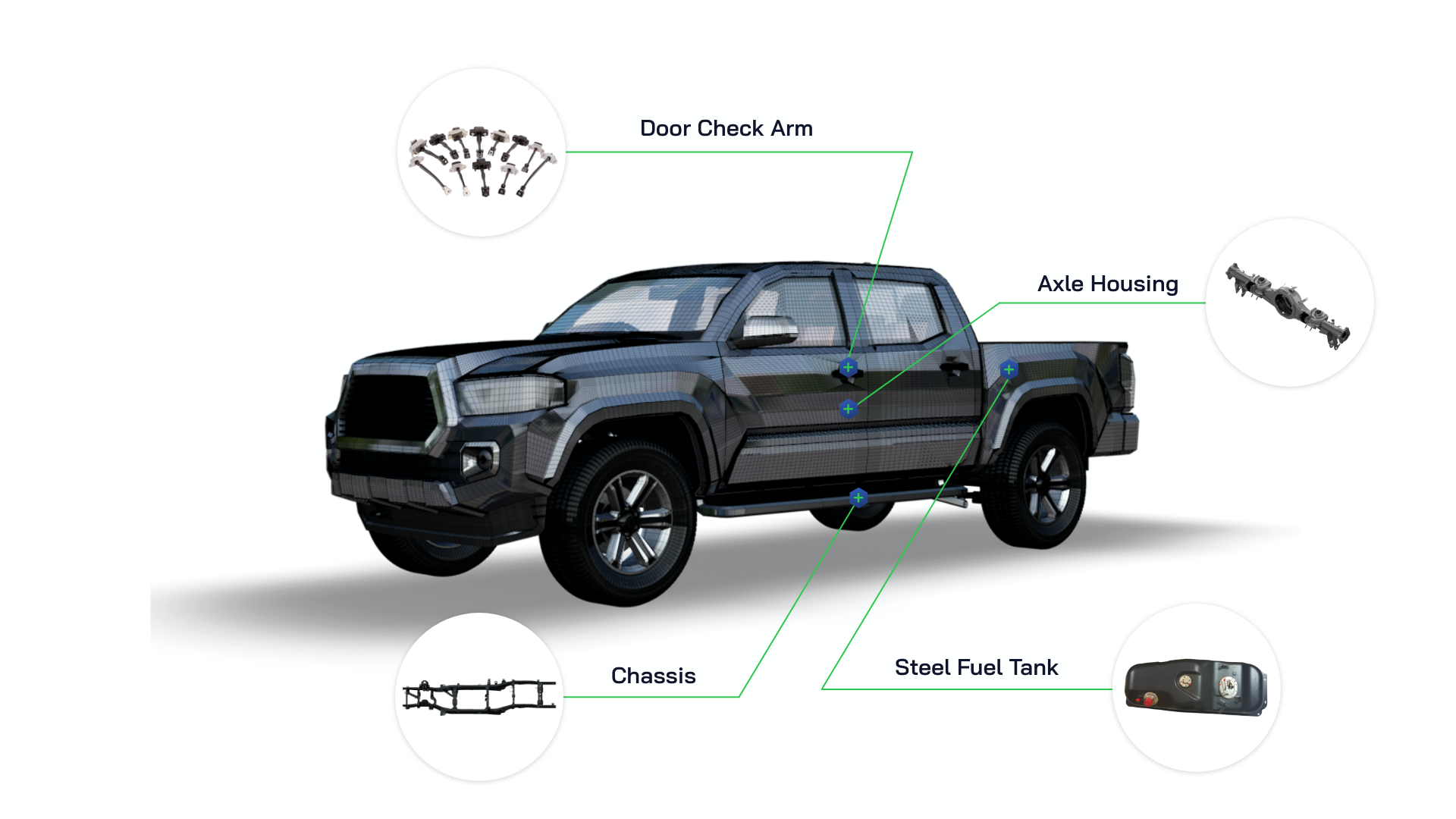
- Driveshaft: (Image: A driveshaft) Transmits power from the transmission to the rear axle(s).
- Differential: (Image: A differential) Allows the wheels on an axle to rotate at different speeds, crucial for turning.
- Axle Shafts: (Image: An axle shaft) Transmit power from the differential to the wheels.
- U-Joints (Universal Joints): (Image: A U-joint) Flexible joints that allow the driveshaft to transmit power even when the angles between the transmission and axle change.
III. Rolling Along: Wheels and Tires
The wheels and tires are the direct interface between the truck and the road.
- Wheels: (Image: A truck wheel) The metal rims that hold the tires.
- Tires: (Image: A truck tire) Provide traction and cushioning. Common types include radial tires, bias-ply tires, and super singles.
- Hubs: (Image: A wheel hub) Connect the wheels to the axle and contain the wheel bearings.
- Wheel Bearings: (Image: A wheel bearing) Allow the wheels to rotate smoothly.
IV. Stopping Power: Brake System
A reliable brake system is paramount for safety.
- Brake Pads/Shoes: (Image: Brake pads and brake shoes) Friction material that presses against the brake rotors or drums to slow or stop the vehicle.
- Brake Rotors/Drums: (Image: A brake rotor and a brake drum) Rotating components that the brake pads or shoes press against.
- Brake Calipers: (Image: A brake caliper) Housing for the brake pads and pistons that force the pads against the rotors.
- Brake Master Cylinder: (Image: A brake master cylinder) Supplies hydraulic pressure to the brake system.
- Air Compressor: (Image: An air compressor) (For air brake systems) Compresses air to provide braking power.
- Air Tanks: (Image: Air tanks on a truck) (For air brake systems) Store compressed air.
- Brake Chambers: (Image: A brake chamber) (For air brake systems) Convert air pressure into mechanical force to apply the brakes.
- ABS (Anti-lock Braking System): (Image: An ABS sensor on a wheel) Prevents the wheels from locking up during hard braking.
V. Steering and Suspension: Keeping You in Control
The steering and suspension systems work together to provide a smooth ride and precise handling.
- Steering Wheel: (Image: A truck steering wheel) Controls the direction of the truck.
- Steering Column: (Image: A steering column) Connects the steering wheel to the steering gear.
- Steering Gearbox: (Image: A steering gearbox) Multiplies the driver's steering input and transmits it to the steering linkage.
- Tie Rods: (Image: Tie rods) Connect the steering gearbox to the steering knuckles.
- Steering Knuckles: (Image: A steering knuckle) Connect the wheels to the suspension system and allow them to pivot.
- Leaf Springs: (Image: Leaf springs) (A common type of suspension) Provide suspension by flexing under load.
- Air Springs: (Image: Air springs) (Another type of suspension) Use compressed air to provide a smoother ride.
- Shock Absorbers: (Image: Shock absorbers) Dampen oscillations and improve ride control.
- Stabilizer Bar (Sway Bar): (Image: A stabilizer bar) Reduces body roll during cornering.
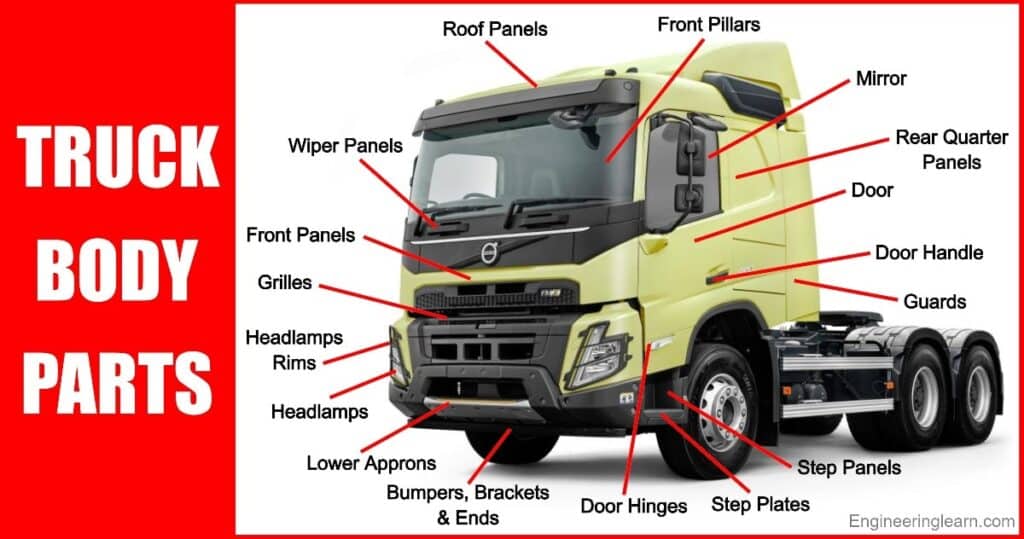
VI. The Body and Cab: Protection and Comfort
The body and cab provide protection for the driver and cargo, and contribute to the truck's overall functionality.
- Cab: (Image: A truck cab) The driver's compartment.
- Hood: (Image: A truck hood) Covers the engine.
- Grille: (Image: A truck grille) Allows air to flow to the radiator.
- Bumper: (Image: A truck bumper) Provides protection in the event of a collision.
- Fuel Tank: (Image: A truck fuel tank) Stores fuel.
- Fifth Wheel: (Image: A fifth wheel coupling) (For semi-trucks) Connects the tractor to the trailer.
- Trailer: (Image: A semi-trailer) The cargo-carrying portion of a semi-truck.
VII. Electrical System: Powering Everything Else
The electrical system powers all the electronic components of the truck.
- Battery: (Image: A truck battery) Stores electrical energy.
- Alternator: (Image: An alternator) Charges the battery and provides power to the electrical system while the engine is running.
- Starter: (Image: A truck starter) Cranks the engine to start it.
- Wiring Harness: (Image: A wiring harness) Connects all the electrical components.
- ECU (Engine Control Unit): (Image: An ECU) Controls the engine's operation.
- Lights: (Image: Various truck lights - headlights, taillights, etc.) Provide visibility.
Practical Advice and Actionable Insights:
- Invest in a good parts catalog: These catalogs provide detailed diagrams and part numbers for your specific truck model.
- Take pictures of the parts you're replacing: This can be helpful when ordering new parts.
- Keep a maintenance log: Record all repairs and maintenance performed on your truck, including the date, mileage, and parts used.
- Don't be afraid to ask questions: If you're unsure about a part or repair, consult a qualified mechanic.
Potential Challenges and Solutions:
- Finding the right part: Use your truck's VIN (Vehicle Identification Number) to ensure you're ordering the correct part.
- Dealing with counterfeit parts: Buy parts from reputable suppliers.
- Understanding technical jargon: Consult a mechanic or use online resources to clarify unfamiliar terms.
Table of Prices (Example):
| Part Name | Approximate Price Range | Notes |
|---|---|---|
| Brake Pads (Front Set) | $50 - $200 | Price varies based on material and brand. |
| Water Pump | $80 - $300 | Price varies based on engine type. |
| Alternator | $150 - $500 | Price depends on amperage and brand. |
| Starter | $100 - $400 | Price depends on engine type. |
| Fuel Injector | $50 - $200 (per injector) | Price varies greatly by engine and manufacturer. |
| Truck Tire (Single) | $200 - $600 | Price varies by size, type, and brand. |
Note: These prices are estimates and can vary significantly based on the specific truck model, location, and supplier. It's always best to get a quote from a local parts supplier or mechanic.
Frequently Asked Questions (FAQ):
-
Q: Where can I find the part number for a specific truck part?
- A: The part number is usually printed on the part itself. You can also find it in your truck's owner's manual or a parts catalog.
-
Q: What's the difference between OEM and aftermarket parts?
- A: OEM (Original Equipment Manufacturer) parts are made by the same company that made the original parts for your truck. Aftermarket parts are made by other companies and can be a more affordable option.
-
Q: How often should I replace my brake pads?
- A: Brake pad replacement frequency depends on driving conditions and braking habits. Inspect your brake pads regularly and replace them when they wear down to the minimum thickness.
-
Q: What are some signs that my truck's engine is overheating?
- A: Signs of engine overheating include steam coming from under the hood, a rising temperature gauge, and a sweet smell of coolant.
Conclusion:
Understanding the names and functions of truck parts is essential for any truck owner or operator. By familiarizing yourself with the components described in this guide, you'll be better equipped to communicate with mechanics, perform preventative maintenance, and keep your truck running smoothly and safely for years to come. This knowledge empowers you to be a more informed and proactive participant in the maintenance and care of your valuable machine. So, keep this guide handy, and continue to learn about the intricate workings of your truck – it's an investment that pays off in the long run.