Understanding how much dirt a dump truck can haul is crucial for anyone involved in construction, landscaping, or home improvement projects. Whether you're estimating costs, planning logistics, or managing a job site, accurately determining the volume a dump truck can carry will save you time, money, and potential headaches. This comprehensive guide will delve into the factors affecting a dump truck's dirt capacity, providing you with the knowledge and tools to make informed decisions.
Introduction: The Importance of Calculating Dirt Capacity
How Many Yards Of Dirt In A Dump Truck: A Comprehensive Guide
Knowing "how many yards of dirt in a dump truck" is more than just a matter of curiosity; it's a fundamental requirement for successful project management. "Yards" in this context refers to cubic yards, a standard unit of volume measurement in the construction and landscaping industries. Incorrect estimations can lead to:
- Underestimation: Requiring multiple trips and increasing transportation costs.
- Overestimation: Paying for more dirt than you need, resulting in wasted materials and disposal costs.
- Scheduling Delays: Inaccurate calculations can disrupt the project timeline due to material shortages or surpluses.
- Budget Overruns: Increased transportation costs and potential material waste directly impact your project budget.
Therefore, understanding the various factors that influence a dump truck's dirt capacity is essential for efficient planning and cost control.
Section 1: Understanding Dump Truck Types and Sizes
The primary determinant of a dump truck's dirt capacity is its size and type. Dump trucks are not a one-size-fits-all solution; they come in various classifications, each designed for specific tasks and load capacities. Here's a breakdown of common dump truck types:
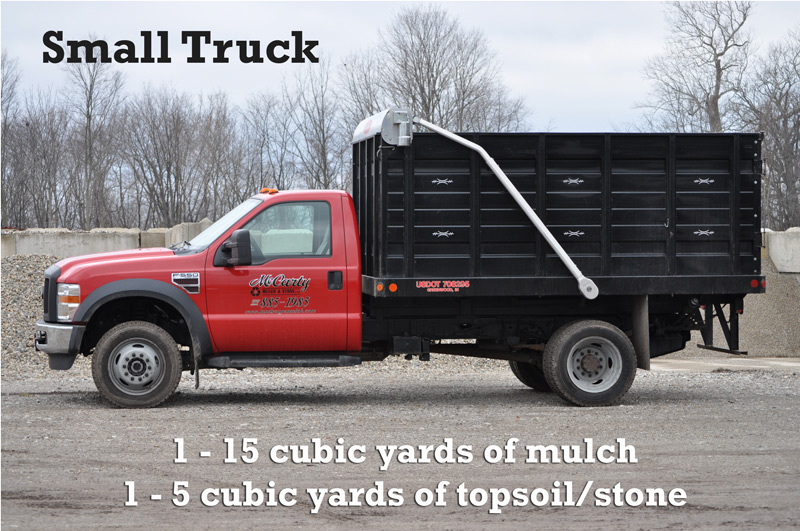
- Standard Dump Truck (Single Axle): These are the most common type, typically used for residential projects and smaller commercial jobs. They usually have a capacity of 10-14 cubic yards of loose dirt.
- Tandem Axle Dump Truck: These trucks feature two rear axles, providing increased stability and load-bearing capacity. Tandem axle dump trucks can typically carry 12-18 cubic yards of loose dirt.
- Tri-Axle Dump Truck: With three rear axles, these trucks are designed for heavy-duty applications. Their capacity ranges from 15-25 cubic yards of loose dirt, depending on the bed size and regulations.
- Quad Axle Dump Truck: These are the largest and most powerful dump trucks, often used for major construction projects and hauling extremely heavy loads. They can carry 20-30+ cubic yards of loose dirt.
- Semi-Trailer Dump Truck: Consisting of a tractor unit pulling a detachable trailer, these trucks are capable of hauling significantly larger volumes of dirt. Capacities can vary greatly, often exceeding 25-40+ cubic yards.

Table: Dump Truck Types and Approximate Dirt Capacities
| Dump Truck Type | Approximate Dirt Capacity (Cubic Yards) | Typical Use Cases |
|---|---|---|
| Single Axle | 10-14 | Residential projects, small commercial jobs |
| Tandem Axle | 12-18 | Medium-sized construction, landscaping projects |
| Tri-Axle | 15-25 | Large construction projects, heavy material hauling |
| Quad Axle | 20-30+ | Extremely heavy loads, major infrastructure projects |
| Semi-Trailer Dump Truck | 25-40+ | Mass excavation, large-scale material transportation |
Section 2: Factors Affecting Dirt Capacity
While the truck type provides a general guideline, several other factors influence the actual amount of dirt a dump truck can safely and legally carry:
- Bed Size: The physical dimensions of the truck bed (length, width, and height) directly determine its volume. Always confirm the exact dimensions of the truck you're using.
- Legal Weight Limits: Federal and state regulations impose weight restrictions on vehicles traveling on public roads. Overloading a dump truck can result in fines and safety hazards. These weight limits consider the total gross vehicle weight (GVW), which includes the truck's weight plus the weight of the load.
- Dirt Density: Different types of soil have varying densities. For example, dry topsoil is lighter than wet clay. Denser materials will result in a lower volume capacity due to weight restrictions. It's crucial to know the approximate weight per cubic yard of the dirt you're hauling.
- Moisture Content: Wet dirt is significantly heavier than dry dirt. High moisture content increases the weight of the load and reduces the volume the truck can carry without exceeding weight limits.
- Heaping vs. Level Load: While it might be tempting to heap the dirt above the bed's sides, doing so can be dangerous and often illegal. Heaped loads can shift during transport, creating instability and potentially causing accidents. Furthermore, regulations often require loads to be secured and covered.
Section 3: Calculating Dirt Capacity: A Step-by-Step Guide
Here's a practical guide to calculating the approximate dirt capacity of a dump truck:
- Determine the Truck Type and Bed Dimensions: Identify the type of dump truck being used (e.g., tandem axle, tri-axle). Obtain the internal dimensions of the truck bed: length (L), width (W), and height (H) in feet.
- Calculate the Bed Volume: Multiply the length, width, and height to find the bed's volume in cubic feet: Volume (cubic feet) = L x W x H.
- Convert Cubic Feet to Cubic Yards: Since 1 cubic yard is equal to 27 cubic feet, divide the volume in cubic feet by 27 to get the volume in cubic yards: Volume (cubic yards) = Volume (cubic feet) / 27.
- Determine the Dirt Density: Research the approximate weight per cubic yard of the type of dirt you're hauling. Consult with your supplier or use online resources to find density charts. Remember to account for moisture content. A typical range for dry topsoil is 2000-2200 lbs per cubic yard. Wet clay can be 3000+ lbs per cubic yard.
- Determine the Truck's Legal Weight Limit: Find the legal weight limit for the truck in your area. This information can be found on the truck's registration or by contacting your local Department of Transportation.
- Calculate the Maximum Load Weight: Subtract the empty weight of the truck (tare weight) from the legal weight limit to determine the maximum weight of the dirt the truck can carry.
- Calculate the Maximum Volume Based on Weight: Divide the maximum load weight by the weight per cubic yard of the dirt. This will give you the maximum number of cubic yards the truck can carry without exceeding the weight limit.
Example:
Let's say you have a tandem axle dump truck with a bed measuring 14 feet long, 8 feet wide, and 4 feet high. The dirt is dry topsoil with a density of 2100 lbs per cubic yard. The truck's legal weight limit is 60,000 lbs, and its empty weight is 25,000 lbs.
- Bed Volume (cubic feet): 14 ft x 8 ft x 4 ft = 448 cubic feet
- Bed Volume (cubic yards): 448 cubic feet / 27 cubic feet/yard = 16.6 cubic yards (This is the physical capacity of the bed)
- Maximum Load Weight: 60,000 lbs - 25,000 lbs = 35,000 lbs
- Maximum Volume Based on Weight: 35,000 lbs / 2100 lbs/cubic yard = 16.66 cubic yards
In this example, the truck's physical capacity (16.6 cubic yards) is almost exactly the same as its weight-limited capacity. Therefore, you could fill the bed completely with this type of dry topsoil without exceeding the legal weight limit.
Section 4: Tips for Accurate Estimation and Efficient Loading
- Consult with Professionals: When in doubt, consult with experienced contractors, dump truck operators, or material suppliers for accurate estimations.
- Use a Scale: If possible, use a scale to weigh each load to ensure you're not exceeding weight limits. This is especially important for materials with variable density.
- Distribute the Load Evenly: Proper load distribution is crucial for stability and safety. Ensure the dirt is spread evenly throughout the truck bed.
- Consider Material Shrinkage: Some materials, especially loose soil, may compact or shrink during transport. Factor in potential shrinkage when estimating the required volume.
- Secure the Load: Use tarps or other appropriate coverings to secure the load and prevent spillage, especially when hauling on public roads.
- Maintain Accurate Records: Keep detailed records of the number of loads, the type of material, and the weight of each load to track material usage and costs effectively.
Section 5: Potential Challenges and Solutions
- Uncertainty about Dirt Density: Solution: Obtain a sample of the dirt and have it tested to determine its density accurately. Alternatively, use a conservative estimate based on the highest potential density.
- Difficulty Determining Legal Weight Limits: Solution: Contact your local Department of Transportation or consult the truck's registration documents for accurate weight limit information.
- Overloading the Truck: Solution: Monitor the weight of each load carefully using a scale or by calculating the volume based on known density and comparing it to the truck's weight limit. If necessary, reduce the load size.
- Uneven Load Distribution: Solution: Train the loader operator to distribute the material evenly throughout the truck bed. Use visual guides or markings to ensure proper load distribution.
- Changes in Material Moisture Content: Solution: Monitor weather conditions and adjust load sizes accordingly to account for increased weight due to moisture.
Section 6: The Price of Dirt and Transportation
The price of dirt varies widely depending on the type of soil, the quantity purchased, and the distance to the delivery location. Transportation costs are typically calculated per cubic yard or per load and depend on factors like fuel prices, distance, and the size of the dump truck required. It's essential to obtain multiple quotes from different suppliers and transportation companies to ensure you're getting the best value.
Table: Estimating Dirt Costs (Example)
| Item | Cost per Cubic Yard | Notes |
|---|---|---|
| Topsoil (Dry) | $20 - $40 | Price varies based on quality and supplier. |
| Fill Dirt | $10 - $30 | Generally less expensive than topsoil. |
| Screened Topsoil | $30 - $60 | Higher quality, free of debris. |
| Transportation (per load) | $100 - $300 | Varies based on distance, truck size, and fuel costs. Assume a tandem axle truck hauling 15 cubic yards. So, cost per cubic yard delivered is $6.67 - $20. |
| Labor (Loading/Unloading) | Varies | Can be included in the transportation cost or charged separately. |
| Total (per cubic yard) | $36.67 - $100 | This is a very rough estimate. Get multiple quotes for your specific location and project requirements. This assumes topsoil purchase, and $100-$300 for transportation and unloading labor. |
Conclusion: Mastering the Art of Dirt Estimation
Calculating the amount of dirt a dump truck can carry is a multifaceted task that requires careful consideration of various factors. By understanding the different types of dump trucks, accounting for weight limits and dirt density, and employing accurate calculation methods, you can optimize your project planning, control costs, and ensure safety. Remember to consult with professionals, maintain accurate records, and adapt your approach based on the specific conditions of your project. Accurate estimation translates directly to efficiency, cost savings, and a successful project outcome.
Frequently Asked Questions (FAQ)
- Q: Is a yard of dirt the same as a ton of dirt?
- A: No. A yard is a unit of volume, while a ton is a unit of weight. The weight of a yard of dirt varies depending on its density and moisture content.
- Q: How can I find out the legal weight limit for a dump truck?
- A: Check the truck's registration documents, consult with the truck owner or operator, or contact your local Department of Transportation.
- Q: What happens if I overload a dump truck?
- A: Overloading can result in fines, safety hazards, and damage to the truck and roadways.
- Q: Where can I find density charts for different types of soil?
- A: Search online for "soil density chart" or consult with a local material supplier.
- Q: Should I always fill a dump truck to its maximum physical capacity?
- A: Not necessarily. You must ensure that the weight of the load does not exceed the legal weight limit, even if the truck bed isn't completely full.
- Q: What is the best way to secure a load of dirt in a dump truck?
- A: Use a tarp or other appropriate covering to prevent spillage and protect the environment. Follow all local regulations regarding load securement.